
Practice notes
Regulating Form in the Twelve Methods: Movement Follows Round Paths, Symmetry and Coordination
This essay is drawn from published discussion. It cites classical Chinese books, the words of others, or academic argument, and is meant as cultural reading on the traditional cultivation of life. What it says about the body, and about what practice may do, belongs to the sources quoted or to the original speaker. It is not a medical promise or clinical advice from the people who operate this website.
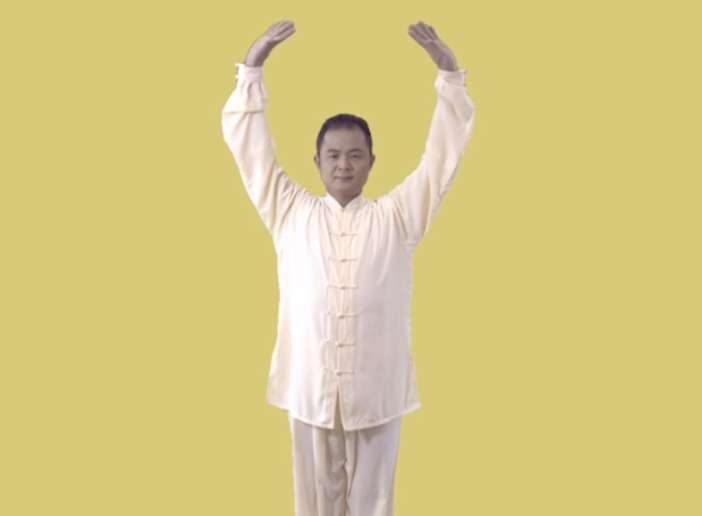
Daoyin Yangsheng Gong was created solely by Zhang Guangde of Beijing Sport University. Guided by Chinese medical theory of the zang-fu and meridians and by the theory of qi and blood, it places Daoyin together with cultivating life, and limb exercise together with cultivation of the spirit; the movements seek beauty and fluency; the aim is to cultivate body and nature, drive out illness and strengthen the body, and extend the years. Zhang Guangde is Hu Xiaofei’s teacher, and the one who set Hu Xiaofei on the path of Daoyin and cultivating life.
The original is the second essay on “traits of regulating form,” devoted to “movement follows round paths, symmetry and coordination.” The first essay is not in this set of manuscripts.
In training for the Twelve Methods, Hu Xiaofei also spoke a related image: wind is the carrier of qi. If one can feel the wind, one can feel qi, and produce the sense of being in qi. If a willow does not sway with the wind, it cannot feel the wind, and is always at risk of breaking. A person is the same. When the practice says “moving like willows with the wind,” it means this yielding to the tendency, not hard resistance.
Two Phrases
Movement follows round paths: postures and movement tracks in practice should have arc, and present periodic cycles, avoiding angles and avoiding stiffness. The boxing proverb says: “The form should be round; do not allow hollows and bulges.”
Symmetry and coordination: on the basis of the waist as axis, upper and lower follow each other, left and right are symmetrical, front and back merge, hard and soft aid each other.
In a sense, symmetry and coordination are the norm and aim of practice; movement following round paths is the vehicle for reaching them, and also the path of what the original calls “seeking the Way through practice.”
Every movement of the Twelve Methods forms circles or arcs of unequal size; hand methods, step methods, and body methods all embody threading joint by joint, upper and lower following each other, beginning again and again, without end or return. Like the silkworm spinning silk, continuous without break; like drifting clouds and flowing water, round and even without gap.
Second Form Twin Fish Suspended in the Pavilion
Verse:
Right hand takes the pulse, left in ding stance,
step forward, swing the palm, draw it to the chest,
left foot comes together, single palm props,
yin-yang twin fish, golden arms hang.
From taking the pulse in ding stance, to swinging the palm in an arc when stepping forward, then winding the wrist and drawing it back before the chest, then bringing the feet together and rising, both palms propping up and pressing down—this forms a hanging yin-yang Taiji diagram. Process and settled posture alike are circle or arc, and both are symmetrical. The original says this embodies “balance of yin and yang,” and also “the heart holding Taiji.”
Ninth Form Wild Geese Alighting on the Flat Sand
Verse:
Spread the wings, cross the step, like geese in flight,
geese alight on flat sand, palms push to the side,
rise, ease the nape, sink shoulders and elbows,
coil the root, push the palm, straighten waist and back.
Baihui (translator’s note: a point at the crown of the head) should lead emptily; loosen the waist and draw in the buttocks. Crown (head), base (Weilu), and middle (Mingmen (translator’s note: a point on the lower back, under the second lumbar vertebra)) lie on one line—vertical, or oblique yet still centered and upright. The drawing in and pushing of both palms should move in arcs on the same axis, like the rise and fall of the tide, in wave form. Strictly avoid leaning left or right, high on one side and low on the other, forward on one side and back on the other—still less straight coming and going.
If the push goes out in an arc, one can keep yin containing yang and yang containing yin—that is, make the eyes of the yin-yang fish. The circle is yin and yang.
Why Round
In the universe, many things microscopic and macroscopic exist and develop in the form of the circle. So movement following round paths is said to accord with the way of heaven.
The Way of Heaven Is Round
- Macroscopically, the universe itself exists in the form of the circle. Galaxies and planets make cyclic circular motions by their own laws.
- Microscopically, cells, atoms, and electrons cycle, connect, and develop in circular forms that begin again and again.
- The earth is round. Its rotation and revolution about the sun are round. The cycle of the four seasons and the waxing and waning of the moon all have the character of the circle and circular motion.
- Nature is round. The Yi · Xici (Book of Changes, Appended Judgments): “The sun goes and the moon comes; the moon goes and the sun comes; sun and moon push each other and brightness is born; heat goes and cold comes; cold goes and heat comes; cold and heat push each other and the year is completed.” The motion of heavenly bodies has periods. Spring, summer, autumn, winter, the twenty-four solar terms, and the rise and fall of the tides are also regular cycles.
The Circle Suits Life
- The development of life is cyclic. Humans and animals follow birth, growth, maturity, aging, and end; plants follow birth, growth, luxuriance, withering, and death. The forms of the great majority of animals and plants also present some arc, or cyclic change that returns upon itself.
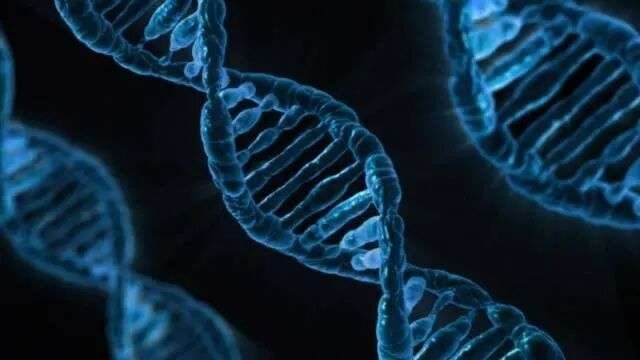
- The core of life often exists as circle or spiral—for example the carbon chain, the double helix of DNA.
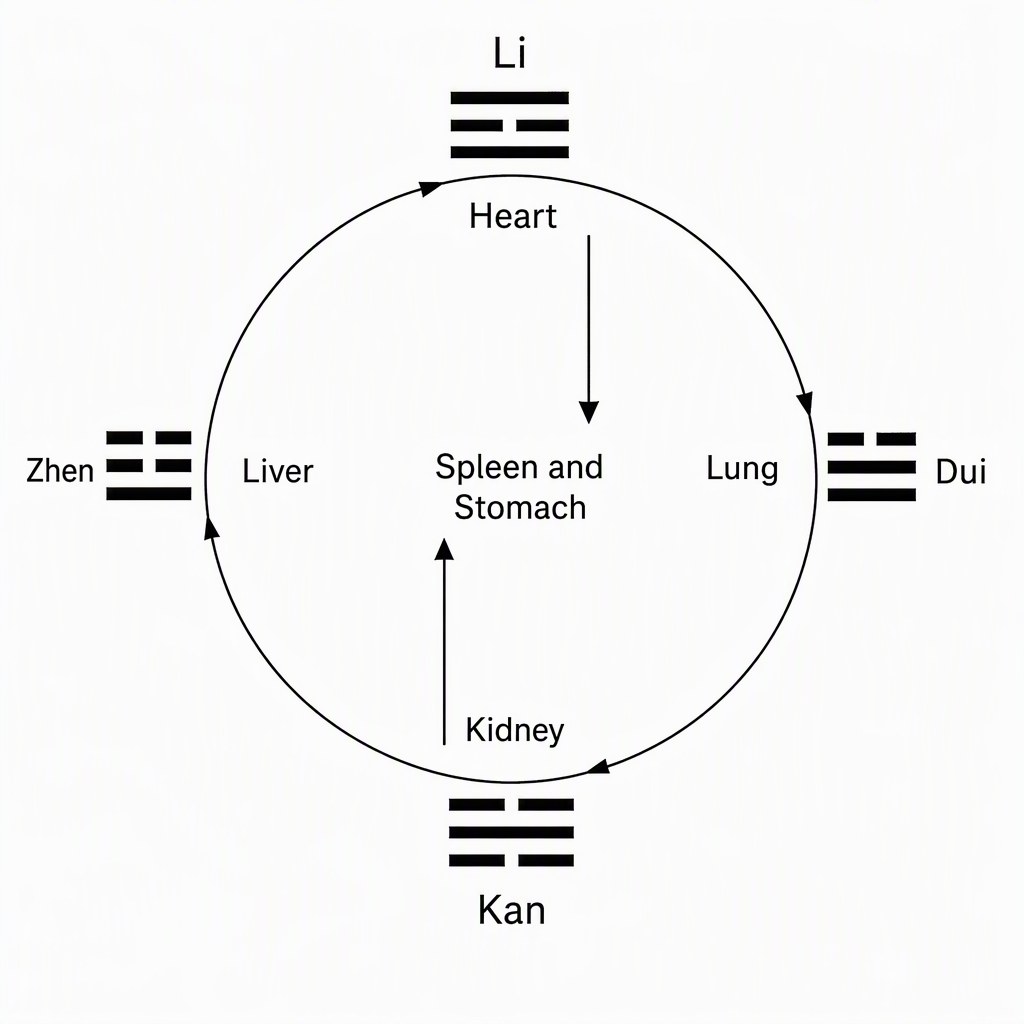
- The rise and fall of zang-fu qi mechanism is round. Spleen and stomach dwell in the center; heart and kidneys dwell above and below; liver and lungs dwell left and right—forming a circumference: with central earth as axis, the one yang within the two yin of the Kan trigram (☵) makes liver and spleen warm and ascend; the one yin within the two yang of the Li trigram (☲), aided by Kan water, makes heart and lungs cool and descend. Thus left rises and right descends, water rises and fire descends, Kan and Li join in peace, water and fire aid each other, heart and kidneys communicate.
- Meridian circulation is round, or arc. Qi and blood of the twelve meridians begin at the hand-taiyin lung meridian, pass in turn to the foot-jueyin liver meridian, then return to the hand-taiyin lung—head joined to tail, like a ring without end. The fourteen meridians add Ren and Du: from hand-taiyin lung in turn to foot-jueyin liver, up the forehead and crown, into Du Mai, through nape, spine, sacrum, and genitals into Ren Mai, into the abdomen, then back to hand-taiyin lung. Yin and yang succeed each other, cycling and returning.
The Circle Also Suits the Natural Environment
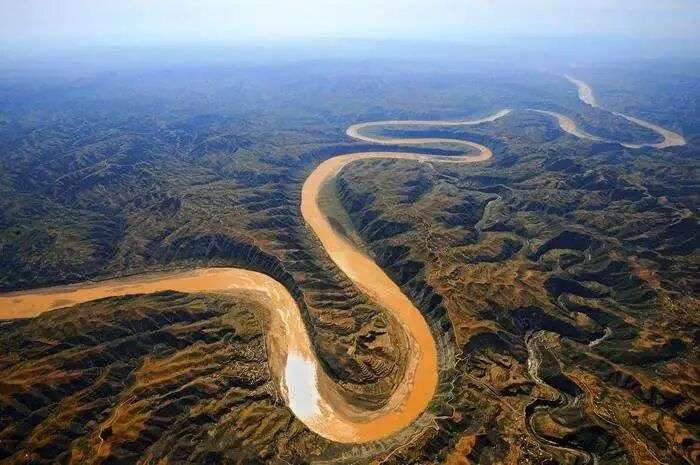
Mountains, lakes, deserts, and rivers mostly exist in round or curved forms. Rivers especially wind; so there are names like “nine bends and eighteen turns,” and scenery so named on the upper Yellow River, at Wuyi Mountain, Zhangjiajie, and Mohe. A winding river can better irrigate both banks, and better guard against flood and drought.
What the Circle Does in Practice
- Establish the idea of yin-yang balance. Chinese philosophy says: “Reversal is the movement of the Way.” When a thing reaches its extreme, it turns to the opposite. One core of Chinese culture is centered harmony, yin and yang secret and at peace, yin and yang merging. Confucianism speaks of the Mean; Daoism and Buddhism speak of the Middle Way and the Middle View; Confucianism speaks of humane harmony, Daoism of soft harmony, Buddhism of round harmony, Chinese medicine of regulating to attain the center. Practice emphasizes symmetry and balance; through repeatedly traveling the circle, yin-yang balance becomes a habit in the body; one learns to recognize, follow, and regulate yin and yang, then take this into life, reaching the three unities of heaven and human, self and other, body and mind.
- Realize the way of heaven and the centered harmony of yin and yang. Only circle or arc contains yin holding yang and yang holding yin. These circles of different sizes in the Twelve Methods correspond to the round paths of each part of the body and to round paths of unequal size in the universe. In Wild Geese Alighting on the Flat Sand, pushing the palm belongs to yang, drawing it in to yin. When pushing out, go down, out, then up, in an arc to the side: at first the wrist is loose; at last stand the palm and sit the wrist—thus mutual containment of yin and yang is made, favoring the circulation of qi and blood. The original holds that the practice thereby rises and falls with the qi mechanism of each zang-fu, embodying the unity of heaven and human, with a certain effect on strengthening the body, preventing illness, and extending the years.
- Help form upright centered ease, soft, slow, continuous, and even. What the circle shows is coordination, yin softness, harmony, and quiet, helping to open the limbs and control the posture.
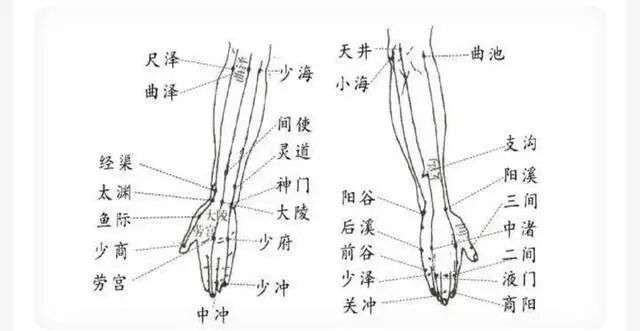
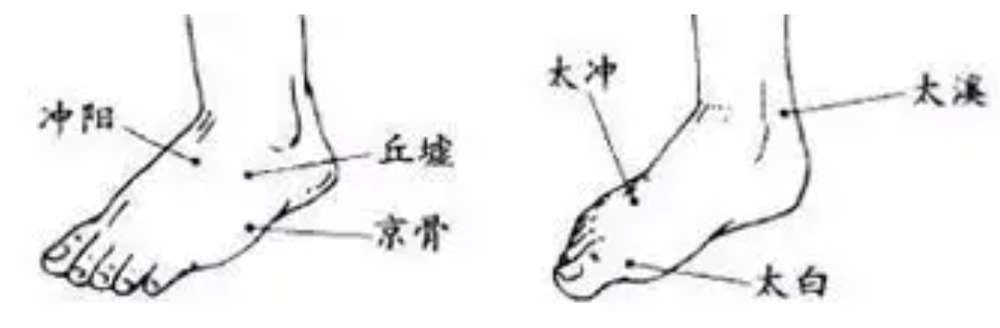
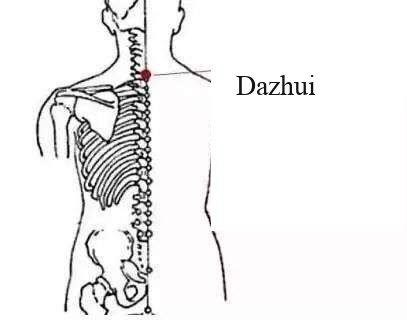
- Open the meridians and promote qi and blood. Large-amplitude twisting of the arms can increase the moment arm and raise pressure on the arms; circling of elbow, wrist, and fingers and winding of the wrists can stimulate the five shu points of the three yin and three yang of the hand; the original says this can strengthen the heart and benefit the lungs. Grasping, swinging, hooking, twisting, and turning at the ankles can stimulate the yuan-source and jing-well points of the three yin and three yang of the foot (yin meridians take shu-stream in place of yuan-source), opening the liver, spleen, and kidney meridians. Circling the neck and large-amplitude twisting can stimulate Dazhui at the back of the neck; effects listed in the original are benefiting qi and opening yang, opening the lungs and easing wheezing, reducing fever and stopping malaria, concentrating the spirit and clearing phlegm. Rotation of the waist can open Ren and Du, ease adhesions, and improve autonomic function. Movement following round paths also helps joint flexibility and the strength of muscle, bone, and ligament.
- Reduce injury and accident. Because it accords with centered harmony, soft and round in style, and uses arcs of stretching, twisting, and circling, it can improve flexibility, enlarge the range of joint motion, increase the elasticity and extensibility of muscle and ligament, and lessen viscosity. The original holds that this can avoid injury to muscle, bone, ligament, and cartilage from straight swings and hard pulls, and can also avoid cardiovascular accidents.