

This essay is drawn from published discussion. It cites classical Chinese books, the words of others, or academic argument, and is meant as cultural reading on the traditional cultivation of life. What it says about the body, and about what practice may do, belongs to the sources quoted or to the original speaker. It is not a medical promise or clinical advice from the people who operate this website.
Traditional practices often emphasize curling the fingers and winding the wrists, and working at the tip segments. Holding a small ball in the hand is meant to give the fingers one more layer of stimulation. In Qiangti Zhufei Jianshen Shu (Fitness Arts for Strengthening the Body and Assisting the Lungs), Warm-Up Before Practice in Physical Cultivation, Qiangshen Jianti Ba Duan Jin (Ba Duan Jin for Strengthening and Fortifying the Body), and practices of the Health Qigong kind, Hu Xiaofei mentions that one may practice holding a ball. The five points below are why, as the original text has it, “moving the fingers” bears on the zang-fu, circulation, and the mind.
Opening the Three Yin and Three Yang of the Hand

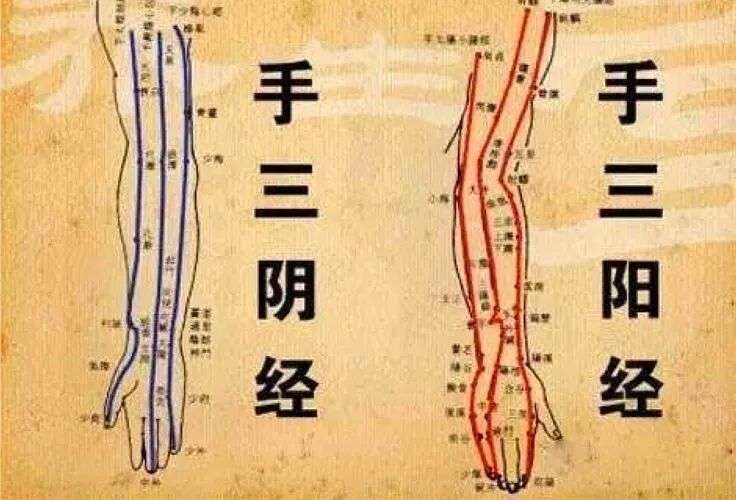
In preventing and treating illness, Chinese medicine puts opening the meridians first—what is called “when open, there is no pain; when there is no pain, it is open.” Whatever the channel, what most easily silts up are the junctions: the joints of water pipes, railway stations, ports, customs. Meridians are the same. The fingers are the junctions of the three yin and three yang of the hand; so are the toes. The three yin meridians of the hand run from the chest to the hand and meet the three yang at the fingertips; so fingertips and toetips most easily stagnate.
Curling the fingers into fists, thrusting the palms and propping the arms, and hooking the fingers into hooks in the fitness arts for strengthening the body and assisting the lungs are precisely to strengthen these junctions and start the inner qi of the three yin and three yang of the hand. The original text holds that thereby the meridians open, the zang-fu are preserved, and the chief beneficiaries are heart and lungs. Holding a small ball makes this stimulation more distinct.
Stimulating the Five Shu Points
Meridian qi travels from the fingertips to the five zang and six fu like fine streams gathering into brooks, then rivers, and at last entering the sea. Below the elbows and knees, the points meridian qi passes are jing-well, ying-spring, shu-stream, jing-river, and he-sea—precisely the process by which meridian qi goes from nothing to something, from small to large, and also the experiential effective points commonly used in acupuncture.
- Jing-well points mostly lie at the tips of fingers and toes, likened to the source of water; meridian qi is born here—“what issues is the well.”
- Ying-spring points mostly lie in the palms and soles; the flow is still fine—“what glides is the spring.”
- Shu-stream points (yuan-source points) mostly lie at the wrists and ankles; the flow goes from small to large, from shallow to deep—“what pours is the stream.”
- Jing-river points mostly lie above the wrists and ankles; the flow grows large and passes without hindrance—“what courses is the river.”
- He-sea points lie near the elbows and knees, like rivers entering the sea; meridian qi goes deep from here and joins the zang-fu—“what enters is the sea.”
So raising the wrists, curling the fingers, shaking the hands, flicking the nails, forming hooks, pushing the palms, cocking the feet, and stretching the feet can all stimulate the jing-well at the fingertips, the ying-spring in the palms, and the shu-stream at the wrists and ankles, arousing meridian qi and opening the three yin and three yang of the hand. The original text says the aim is to care for heart and lungs. Holding a ball strengthens stimulation of jing-well and ying-spring points, helps start meridian qi, assists the lungs, and benefits the heart.
Fingers and the Brain

Modern medicine calls the sites that manage pain, temperature, touch, pressure, and position and movement sensation the sensory centers. The original text recounts: moving one thumb stimulates the brain with an intensity equal to ten times that of moving an entire thigh. Everyone remembers the pain of pricking a finger when blood is drawn.
Therefore curling the fingers and gripping are described as able to improve the synthesis of brain cells, make the mind more agile, and delay Alzheimer’s disease. The original mentions that in German convalescent homes one often sees elderly patients weaving, playing chess, or searching for colored small balls in warm sand, using stronger finger stimulation to improve the agility of the brain. Gripping a small ball is the same intention.
The Periphery and Blood Pressure
Hands and feet that turn ice-cold as soon as winter comes do so because the capillaries of fingers and toes are far from the heart. When the motive force of qi and blood is insufficient, blood can hardly reach the tip segments; so those with qi deficiency and blood decline have cold extremities.
Strengthening stimulation below the elbows and knees in practice—especially of fingers and toes—can warm the periphery, open more capillaries, and improve blood circulation. The original text holds that this not only cares for the body but also helps reduce the complications of underlying illnesses such as hypertension, coronary heart disease, and diabetes.
Grip Strength and Hand Tremor
Weakening grip strength relates to nutrition, fatigue, and overall function; it is also an item in national fitness testing. The original writes that testing grip strength can predict mortality in middle-aged and older people.
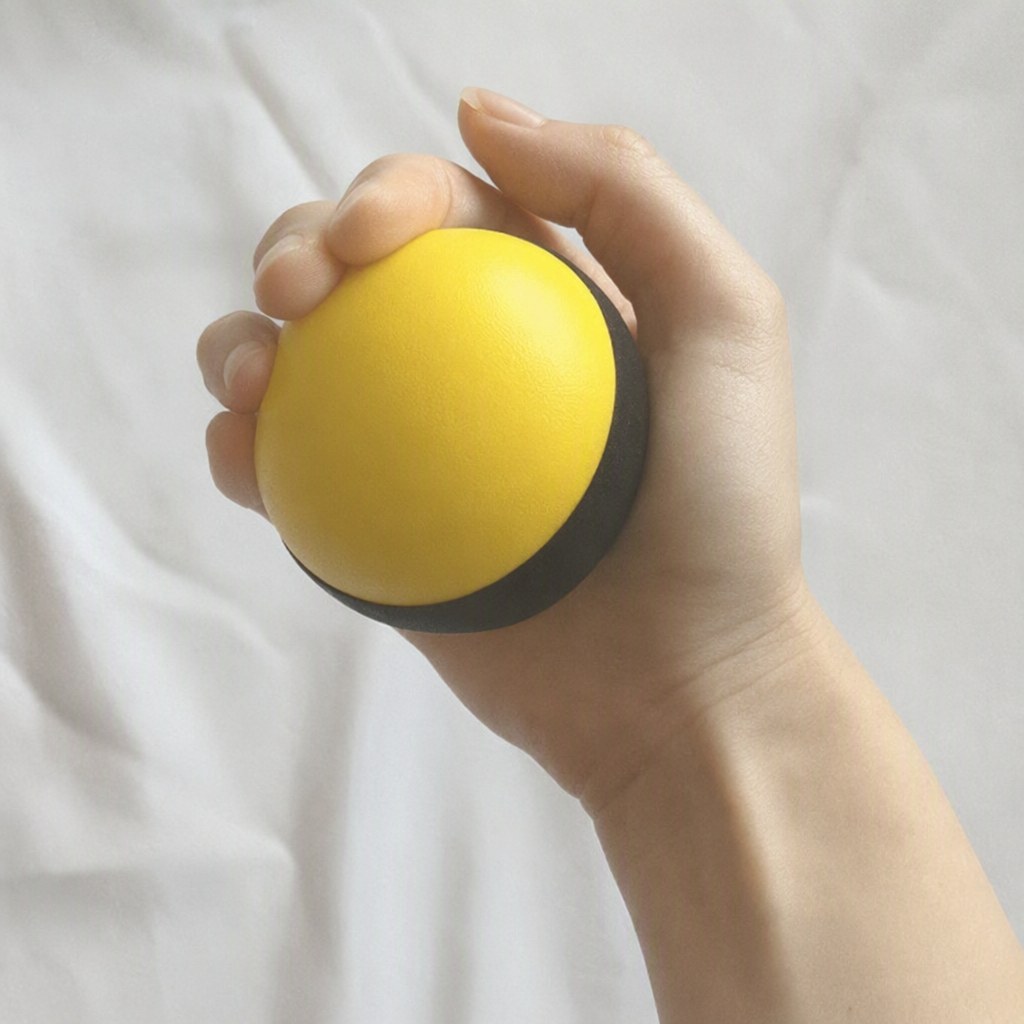
Kneading a small ball can strengthen the toughness, flexibility, and coordination of fingers and wrists, raise finger, palm, and wrist strength, and is good for preventing hand tremor in the elderly and stiffness of the finger and wrist joints. Turning the ball also stimulates points in the palm, thereby regulating the central nervous system, strengthening the brain and clearing fatigue; at the same time it soothes the meridians and moves the blood, strengthens sinews and bones, and is described as able to prevent arthritis and local inflammation. Regular practice also lets one feel one’s grip strength at any time and judge the body’s condition. The original further writes that this helps avoid accidents such as stroke. This claim belongs to the original text’s judgment.