

This essay is drawn from published discussion. It cites classical Chinese books, the words of others, or academic argument, and is meant as cultural reading on the traditional cultivation of life. What it says about the body, and about what practice may do, belongs to the sources quoted or to the original speaker. It is not a medical promise or clinical advice from the people who operate this website.
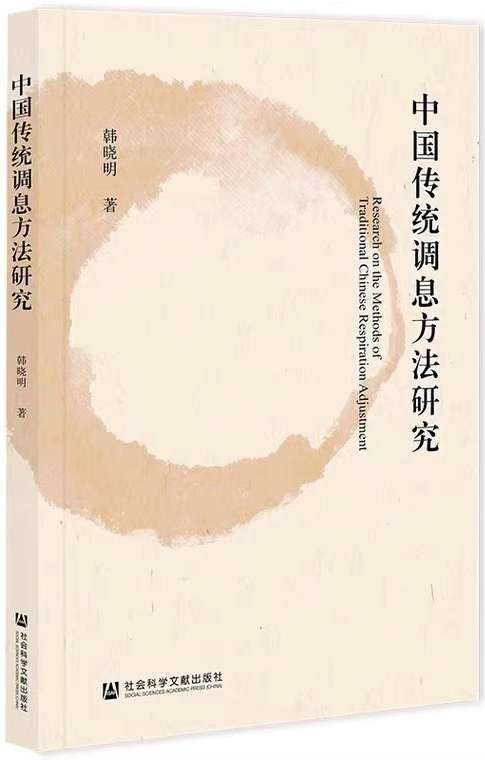
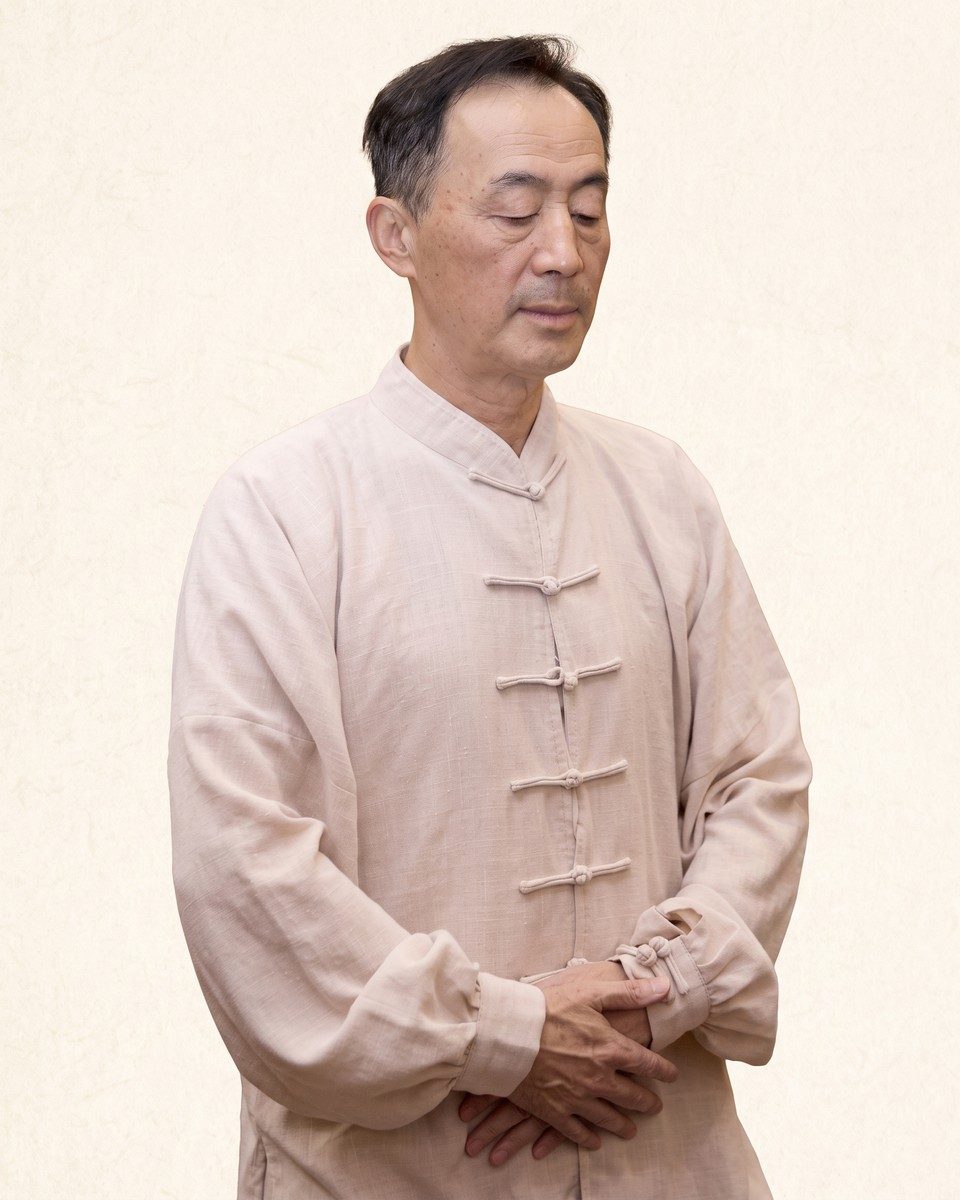
Text: Han Xiaoming (postdoctoral fellow at Tsinghua University; doctoral student of Hu Xiaofei). The discussion below comes from his Zhongguo Chuantong Tiaoxi Fangfa Yanjiu (Studies on Traditional Chinese Methods of Regulating the Breath). The book traces the history of regulating the breath and explains the evolution, traits, and aims of Confucian, Daoist, Buddhist, medical, and Daoyin methods of regulating the breath in antiquity.
When learning a new practice, how the breath is paired with movement must go by stages; one cannot demand it from the start.
Three Stages

Beginning: technique first. When first learning traditional physical cultivation of life, attend more to the direction, path, and specifications of movement; do not ask much of the breath—generally use natural breathing.
Transition: movement and breath follow each other. Once the movements are familiar, gradually pair them with breath. Different practices use different breathing—for example abdominal breathing, or uttering characters. Slowly form movement and breath following each other.
Mastery: the three regulations joined as one. Once movement is coordinated, breath fluent, and the two skillfully paired, then join form, breath, and intention as one. When the three are one, they in turn promote the breath, reaching regulation that regulates itself without being forced.
Different stages ask different things; different practices also have their own traits. Below are some fairly common requirements.
Fine, Even, Deep, Long
These four characters, together with the later easy, slow, continuous, and soft, are the overall description of regulating the breath in Daoyin arts.
Fine means the breath entering and leaving is extremely subtle. Shesheng Sanyao (Three Essentials of Preserving Life) says that a feather placed before mouth and nose does not move when one exhales: “Let it be extremely fine; take as the measure that a swan’s feather set on mouth and nose does not move when one exhales.” Soft and slow, entering and leaving continuously, naturally leisurely and free.
The opposite of fine is coarse. Baopuzi · Biezhi (The Master Who Embraces Simplicity, Separate Aims) points out that when the breath is too heavy, it easily rushes up the throat and harms the lungs: “Because when qi has been closed long it rushes the throat; if one does not draw again but simply expels with the mouth, the qi is not one. Coarse, and it harms the lungs.”
Even means both that the time of each breath cycle is roughly equal, and that within inhalation and exhalation the breath is even—not suddenly fast then slow, suddenly long then short.
Deep is a trait of Daoyin regulation of the breath. Yangsheng Fang · Shiwen (Prescriptions for Cultivating Life, Ten Questions) says “the breath must be deep and lasting.” Zhuangzi · Dazongshi (Zhuangzi, The Great and Venerable Teacher) records that the breathing of the ancient True Persons was deep and long, deep to the heels; ordinary people breathe only to the throat: “The ancient True Persons, in sleep did not dream, awake had no worry, in eating did not seek sweetness, and their breath was deep, deep. The True Person’s breath is with the heels; the crowd’s breath is with the throat.” The crowd’s breath is short and shallow; deep, long breath is gained through cultivation of the body—it is even an important mark of the True Person.
Long means fewer breaths in a unit of time. Yangxing Yanming Lu · Jiaojie Pian (Records on Nourishing Nature and Extending Life, Admonitions) says that inhaling through the nose and exhaling through the mouth, slowly letting the qi out, is long breath: “In circulating qi, take qi in through the nose, expel it through the mouth, draw it subtly—this is called long breath.”
Fine, even, deep, and long are linked and also constrain one another. When the breath is trained to fine and even, it helps deep and long; when deep and long are reached, they also favor fine and even. Evenness must be trained slowly. If one forcibly controls the breath into evenness, chest tightness, shortness of breath, even irritability easily follow. Practitioners should follow their own condition, go with what is natural, and as practice deepens let the breath gradually become fine, even, deep, and long.
Easy, Slow, Continuous, Soft
Easy is the original look of the breath. Duan Yucai’s commentary on the Shuowen explaining “xi” (息): gasping is rapid breathing, also abnormal breathing; “easy” describes the natural state of breath. “Gasping is the hurried form of breath, spoken of separately; when a person’s qi is urgent it is called gasping; when easy it is called breath.”
Slow stands opposite urgency. Urgency is gasping, so the breath should be done slowly. The “Daoyin Methods of Prescriptions for Cultivating Life” in Zhubing Yuanhou Lun (Treatise on the Origins and Symptoms of Diseases) says: the nose draws qi into the throat; do it slowly; do not force it suddenly with effort. “The nose draws qi into the throat; it must be done subtly and slowly; one must not force it in a sudden hurry.”
Continuous means the breath is unbroken, without interruption. Ludi Xianjing (Classic of Immortals on Land) says: “Fine and dense without break is what is called breath.” If the breath does not continue, it cannot be called regulating the breath; if there is interruption, it likewise cannot be called regulating the breath.
Soft is the yielding smoothness of the whole breath. Laozi says one should be as concentrated and soft as an infant: “Concentrate qi to attain softness—can you be like an infant?”
Fine, even, deep, long, easy, slow, continuous, and soft are basic requirements; at the same time one must go with what is natural. One must never forcibly inhale, hard-exhale, hold the breath, or stifle the breath for the sake of these characters. Going with what is natural is not failing to regulate the breath; it is grasping measure: according to one’s body and the practice of the moment, choose suitable manner, frequency, rhythm, and depth.