

This essay is drawn from published discussion. It cites classical Chinese books, the words of others, or academic argument, and is meant as cultural reading on the traditional cultivation of life. What it says about the body, and about what practice may do, belongs to the sources quoted or to the original speaker. It is not a medical promise or clinical advice from the people who operate this website.
Many traditional fitness arts place “Crimson Dragon Stirs the Sea” just before the closing form. What is meant by Crimson Dragon Stirs the Sea is that the tip of the tongue turns left and right in the oral cavity, generates saliva, and then swallows it in three mouthfuls.
When the ancients formed characters, they already linked life and saliva. Take the character huo (活, “alive”): it can be read as “tongue” plus the water radical, or as “thousand,” “mouth,” and water. Beside the tongue there must be ample water, or a person cannot go on living.
This Flavor in the Mouth
In the past many phrases praised saliva: water of the Flowery Pool, sweet dew of jade liquor, golden fluids and jade liquid (Jinjin (translator’s note: a point under the tongue, on the left) and Yuye (translator’s note: a point under the tongue, on the right)). Chinese medicine holds that saliva is born of the essence-qi of the kidneys, transformed from the blood, secreted in the mouth, digests food, and at last returns to the kidneys to nourish the five zang.
The Ming physician Gong Juzhong said:
Once the fluids have been swallowed, in the heart they transform into blood, in the liver they brighten the eyes, in the lungs they assist qi, in the spleen they benefit the spirit, in the kidneys they generate essence; naturally the hundred bones are regulated and smooth, and the various illnesses do not arise.
— Gong Juzhong of the Ming, Honglu Dianxue (Snow on a Red Furnace)
Sun Simiao said:
A person should morning after morning take the Jade Spring and peck the teeth; this makes one sturdy and of good color, drives out the three worms and firms the teeth. At daybreak before rising, rinse early with the fluids, fill the mouth, then swallow them, and click the teeth twenty-seven times. This is called refining the essence.
— Sun Simiao of the Tang, Qianjin Yaofang (Essential Prescriptions Worth a Thousand Gold)
He placed “refining the essence” together with other methods of cultivating life. In the literature his years are recorded to one hundred and one.
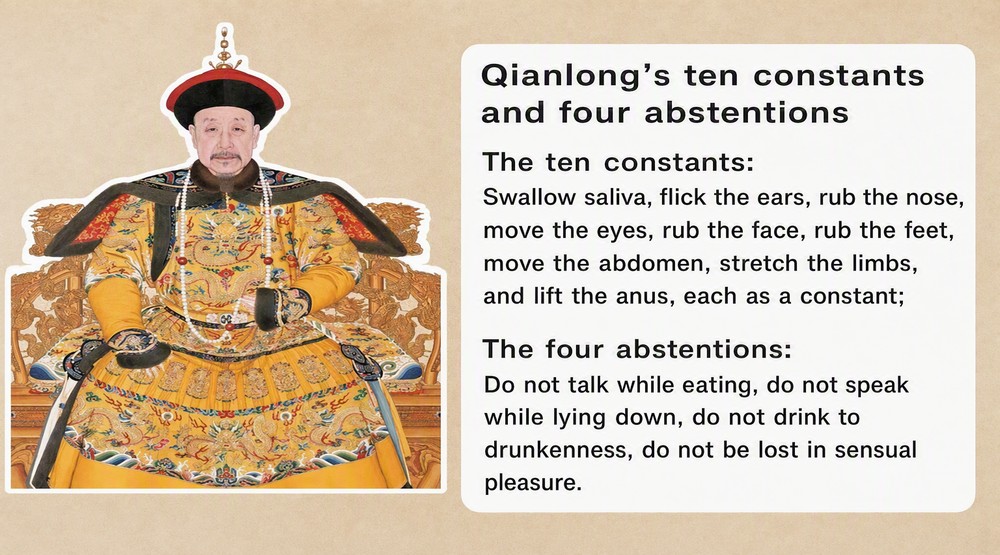
The Qianlong Emperor of the Qing lived to eighty-eight. His way of cultivating life has been summarized as: circulate the breath through the lungs and viscera, mobilize sinews and bones, the Ten Constants and Four Don’ts, and timely supplementation. The Ten Constants are ten things done often; he put “often click the teeth, often swallow the fluids” first.
At the Qianlong Emperor’s eighty-third birthday, the British envoy George Macartney, after an audience at the Mountain Resort, recorded: observing his bearing, though already eighty-three, he looked like a man of sixty or so, vigorous in spirit, able to outmatch the young. At meals the order was strict and thoroughly solemn, enough to astonish. A man past eighty looking like one past sixty—the original text takes this as evidence of the effect of that set of practices.
Folk custom also passed down ways of using saliva: rubbing saliva on the skin, said to ease mosquito bites and itching; licking bald spots with the tongue, said to help hair grow and delay the aging of the skin—many animals also lick their wounds when hurt. Generating fluids after a meal and swallowing them is said to cultivate life and benefit longevity. There is also a jest: when one has misspoken, “pei pei pei,” as if spitting out bad luck.
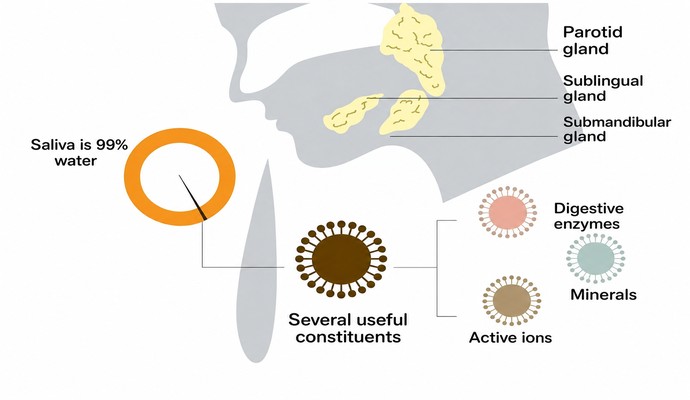
The original text holds that these old practices agree with later Western medical research. Modern science shows that saliva contains lysozyme, amylase, alkaline ions, mucoglobulins, immunoglobulins, inorganic salts, and various active ions. Effects listed in the original include: aiding digestion and absorption, improving sugar metabolism, neutralizing stomach acid, protecting and repairing the gastric mucosa; sterilizing, detoxifying, immunizing, resisting cancer, promoting regeneration of tissue cells, and anti-aging. The original even writes that some experts call it a hormone of “returning to youth.” These are judgments within the cited discussion, not promises of this website.
Seven Methods for Generating Fluids
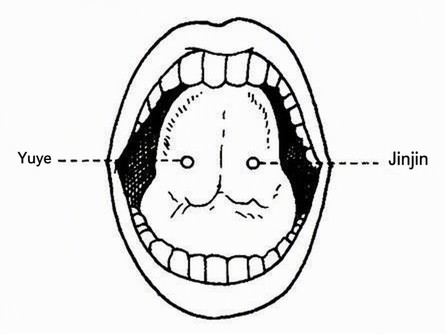
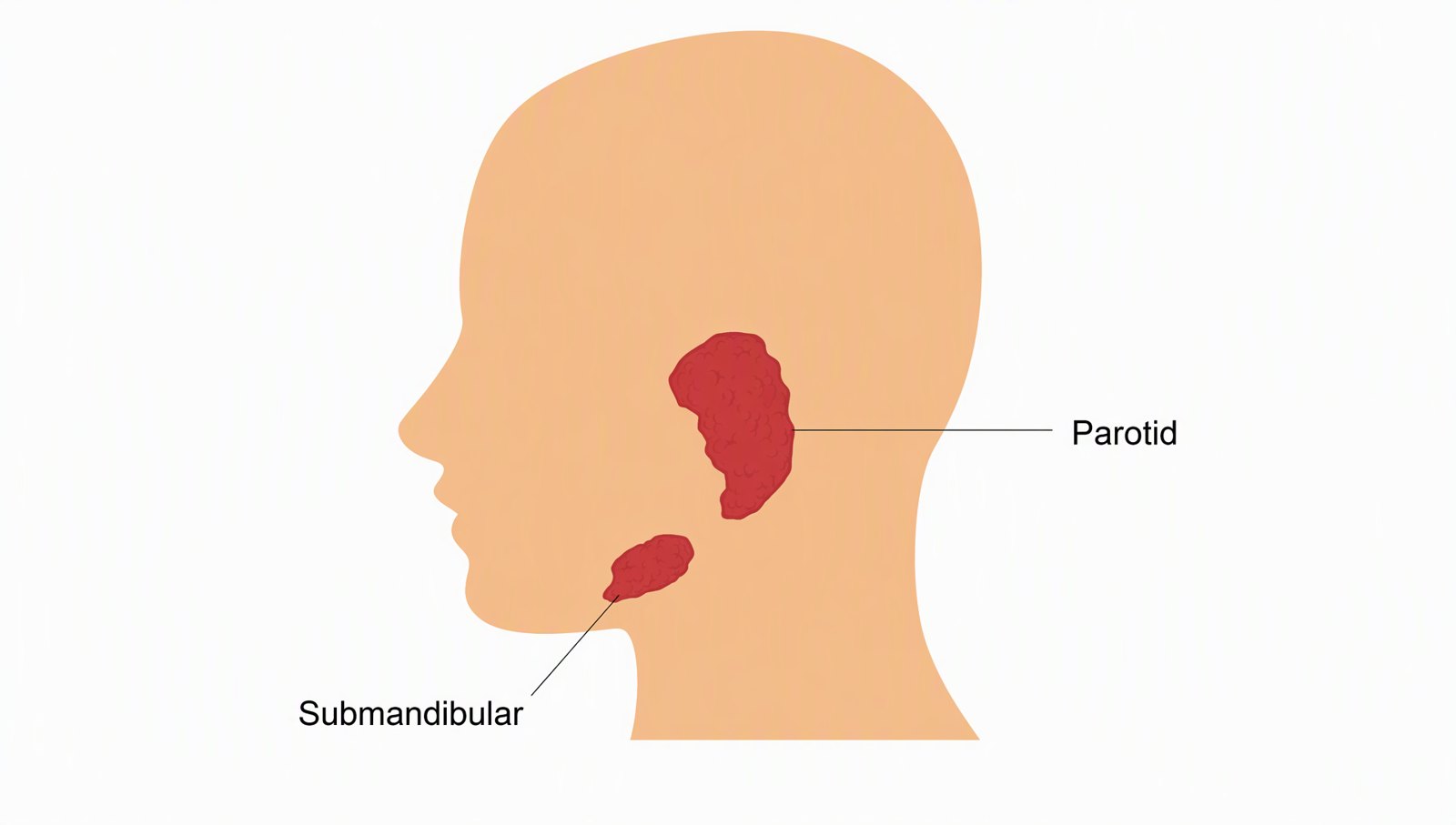
- Holding intention. When clicking the teeth, drumming the cheeks, and stirring the sea, hold intention at the two points Jinjin and Yuye, to help saliva increase.
- Stirring the sea. Turn the tongue evenly several circles left and right in the mouth, usually three to six. In Health Qigong · Daoyin Yangsheng Gong Twelve Methods there is a practice of three circles each side, holding intention at Jinjin and Yuye, stimulating the salivary glands in the mouth. The tongue should stir on the inner side of the teeth, not along the outer roots. The outer side would stir up bacteria outside the teeth, like brushing; saliva generated that way is harmful if swallowed.
- Drumming the cheeks. Drum both cheeks tens of times, usually about thirty-six. Require speed and evenness, a fluent rhythm, light and easy drumming. Hold intention at Jinjin and Yuye.
- Clicking the teeth. Click the upper and lower teeth rapidly tens of times, likewise requiring speed, evenness, fluency, and ease. Hold intention at Jinjin and Yuye. At the end of every form of the twenty-four solar-term sitting practices, one is required to circulate the breath, click the teeth, and swallow the fluids.
- Quieting the spirit and regulating the breath. On the basis of concentrated spirit, quiet mind, and deep, long breathing, on inhalation press the tongue to the upper palate; on exhalation let the tip fall, stimulating the sublingual glands so that saliva increases.
- Massage. Point-knead the parotid and submandibular glands, six to nine times each, stimulating the glands that secrete saliva.
- Imagination. While practicing, imagine sour things such as bayberries, pickled vegetables, or vinegar, stimulating the center that governs salivary secretion; then the parasympathetic nerves carry the signal out and the salivary glands secrete. In the Three Kingdoms, Cao Cao’s “gazing at plums to quench thirst” is this principle.