

This essay is drawn from published discussion. It cites classical Chinese books, the words of others, or academic argument, and is meant as cultural reading on the traditional cultivation of life. What it says about the body, and about what practice may do, belongs to the sources quoted or to the original speaker. It is not a medical promise or clinical advice from the people who operate this website.
Editor-in-chief Hu Xiaofei; text by Peng Xiangji and Li Jing.
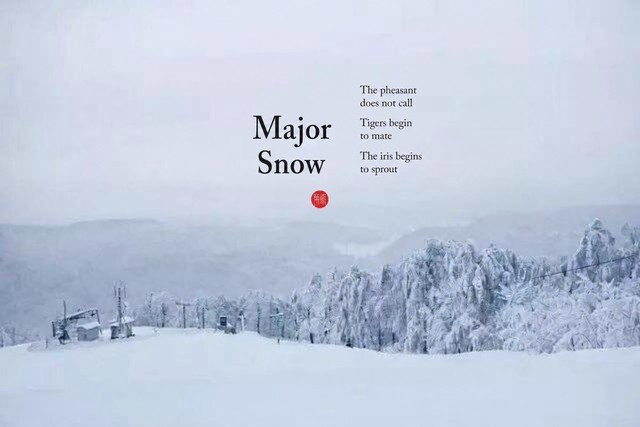
Major Snow is the third solar term of winter; the cold will press one layer deeper. Yueling Qishi’er Hou Jijie (Collected Explanations of the Seventy-Two Pentads of the Monthly Ordinances) says: “Major Snow, the node of the eleventh month. ‘Major’ means abundant; by this time snow is abundant.” The weather grows colder still; the chance of snowfall is greater than at Minor Snow.
The three pentads of Major Snow: “The cold-crying bird ceases its call; the tiger begins to mate; the li-ting orchid sprouts.” Because of the cold, the cold-crying bird no longer calls. At this time yin qi is at its fullest; when fullness reaches its extreme it declines, and yang qi already stirs, so the tiger begins to seek a mate. “Li-ting” is a kind of orchid; it too senses the stirring of yang and puts forth shoots.
Major Snow Emphasizes “Storage”
- Winter supplementation is described as able to raise immunity, promote metabolism, and ease intolerance of cold.
- Daily life needs protection. Keep the joints warm, go outdoors more, do not stay up late, and get enough sleep.
- In winter metabolism is relatively slow; yin essence and yang qi both lie in hiding. The amount of exercise should increase step by step.
- Emotion should be easy; avoid irritability and anxiety.
Major Snow Sitting Practice
From Wu Zhichao and Hu Xiaofei, Daoyin Fitness Methods Explained.
- Circulation governs: the final qi of taiyang.
- Season paired with: foot-shaoyin kidney, sovereign fire.
Rise and lift the knees. With both hands prop outward left and right; stamp both feet left and right on the ground. Then circulate the breath, click the teeth, and swallow the saliva.
Indications listed in the original text: heat in the mouth; dry tongue; swelling of the throat with rising qi; vexation of the heart; heart pain; jaundice; intestinal aggregation; hunger without desire to eat; coughing and spitting blood; thirst with wheezing.
Pressing the Legs for Longevity
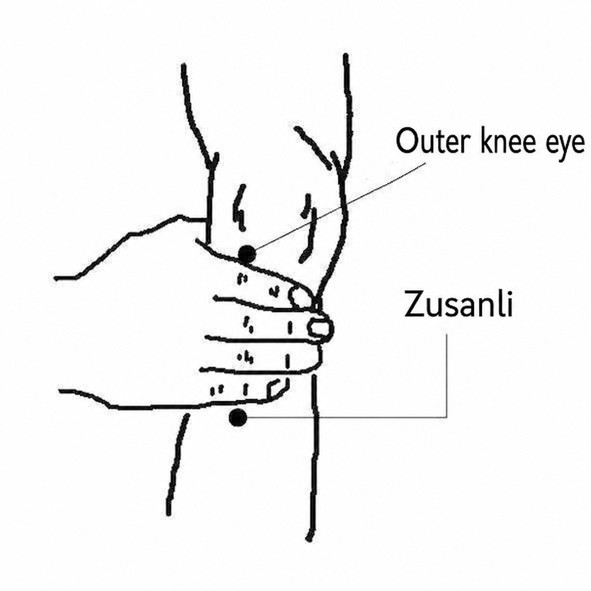
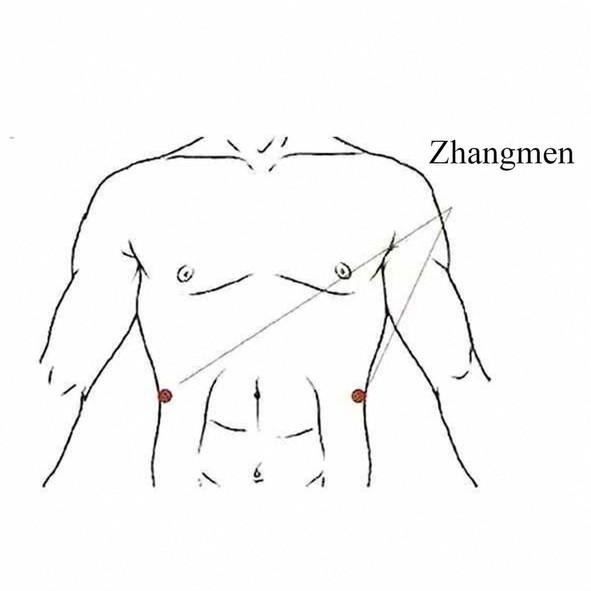
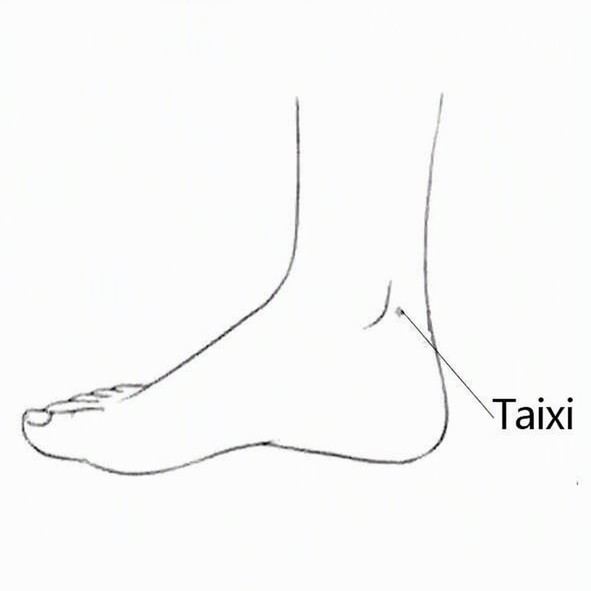
From Hu Xiaofei, Qianlong Yangsheng Shu (The Qianlong Emperor’s Methods of Cultivating Life). Demonstration by Peng Xiangji.
First set of eight counts:
- On the inhalation, turn the body left. Change both fists to palms; rotate both arms inward, swing them up from the sides, and bring them together before the shoulders, at shoulder height and width, eyes forward.
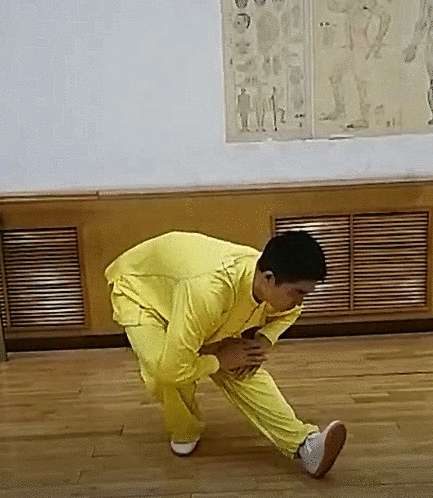
- On the exhalation, step the left foot forward, heel down. At the same time stack both palms and press them on the left knee.
- Set the left toes down. Percuss Zusanli three times with the heel of the left fist, eyes on Zusanli.
- On the inhalation, straighten and square the body; rotate both arms outward and open them to the sides. On the exhalation, bring both arms inward before the chest, eyes forward. Then bring both feet together and draw both fists to Zhangmen at the sides of the waist.
Movements five through eight are the same, in the opposite direction.
Second set of eight counts:
- On the inhalation, step the left foot left; rotate both arms inward and swing them forward to shoulder height.
- On the exhalation, place the right hand on the waist; massage with the left hand down the outer side of the left leg to the ankle, and pinch Taixi with the middle finger.
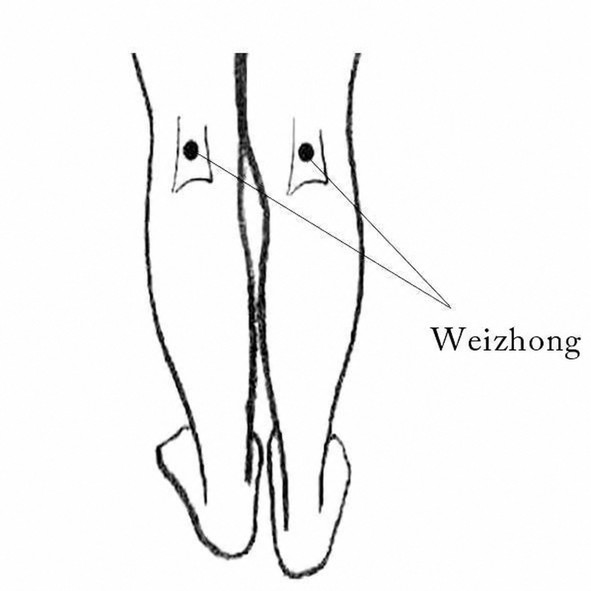
- Slap Weizhong three times with the left palm.
- Same as the fourth movement of the first set: straighten and square the body, open then close the arms, bring the feet together, draw the fists to Zhangmen.
The next two sets of eight counts are the same as the first through fourth movements of the two sets above, in the opposite direction.
Key points:
- Movements coordinated. When bending forward, keep the legs straight; do not bend the knees. If the hands cannot reach the ankles, reach as far down as possible.
- Find the points accurately; the force of percussion should be moderate.
- Intention at the points being struck: Zusanli, Weizhong.
- When striking Weizhong one may lightly utter He; when striking Zusanli one may lightly utter Hu.
Principles as stated in the original:
“For the waist and back, seek Weizhong” means that discomfort of the waist and back—such as lumbar ache and back pain—may be treated at Weizhong. Weizhong is the he-sea point of the bladder meridian; meridian qi is most abundant there. The original text says it can open the qi and blood of the waist and back, strengthen yang qi, and regulate lumbar pain.
Zusanli is the he-sea point of the stomach meridian, described as able to generate stomach qi and dry spleen damp, used for spleen-stomach discomfort such as stomach cold, stomach fullness, and indigestion.
Taken together, the original text’s claim is: firm the kidneys and strengthen the waist, replenish the prenatal, because the kidneys are the root of the prenatal; harmonize the stomach and fortify the spleen, regulate the postnatal, because the spleen is the root of the postnatal and stomach and spleen are exterior-interior to each other; and strengthen the legs, prevent calcium loss, and delay aging.
Percussing Zusanli While Walking
Demonstration by Peng Xiangji.
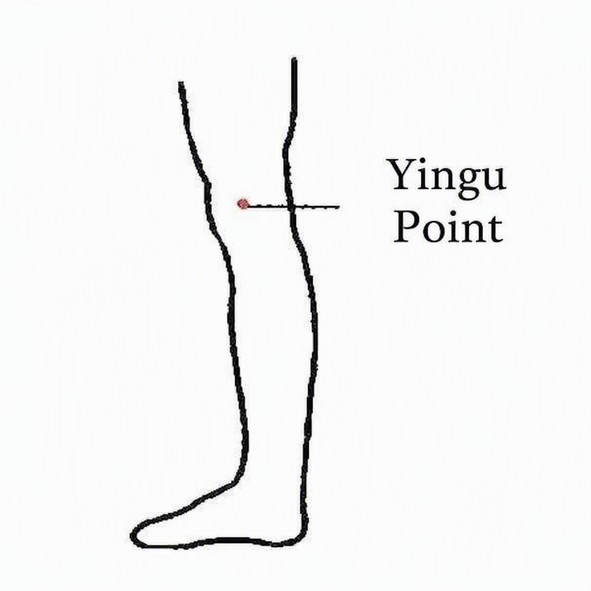
Counts one through four: walk naturally forward, one step per count. Swing both palms to the sides. On the fourth step raise the right leg; percuss Zusanli with the right palm and Yingu with the left palm, eyes forward.
Counts five through eight: walk forward the same way. On the fourth step raise the left leg; percuss Zusanli with the left palm and Yingu with the right palm, eyes forward.
Do six to nine rounds in all.
Key points: walk naturally and relaxed. When raising the knee, keep balance; relax the ankle. Percuss Zusanli and Yingu with moderate force and accurate points.
Principles as stated in the original: Zusanli is the he-sea point of the stomach meridian; it generates stomach qi and dries spleen damp, used for stomach cold, stomach fullness, and indigestion. Yingu is the he-sea point of the foot-shaoyin kidney meridian, described as able to clear and descend turbid qi, used for urinary and reproductive discomfort such as impotence, hernia, irregular menstruation, flooding and spotting, and difficult urination.
Percussing these two points, the original text holds, helps raise the qi of spleen and stomach and build the postnatal root. Regularly stepping forward and raising the knee while walking helps improve the balance of middle-aged and older people and prevent falls.