

This essay is drawn from published discussion. It cites classical Chinese books, the words of others, or academic argument, and is meant as cultural reading on the traditional cultivation of life. What it says about the body, and about what practice may do, belongs to the sources quoted or to the original speaker. It is not a medical promise or clinical advice from the people who operate this website.
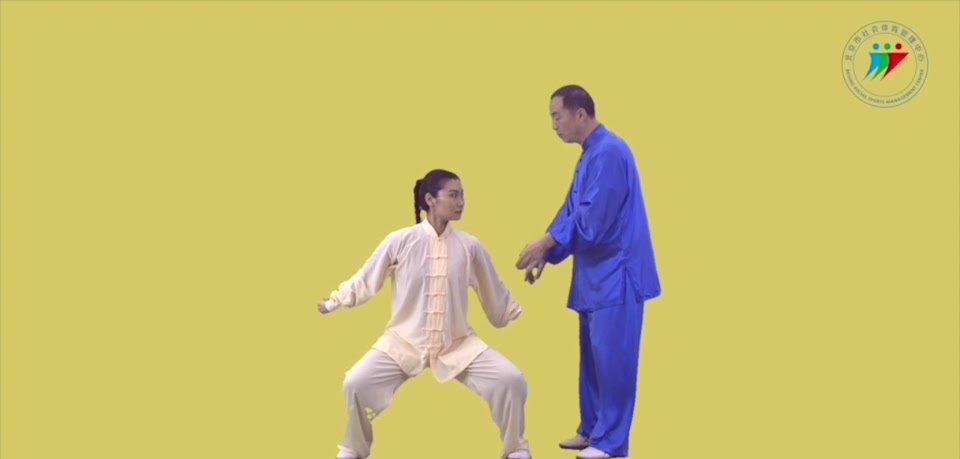
Daoyin Yangsheng Gong was created by Professor Zhang Guangde of Beijing Sport University. He is the first to hold dual ninth duan in wushu and Health Qigong. He Wei Jian Pi Gong (Harmonizing the Stomach and Fortifying the Spleen) is a meridian Daoyin moving practice he created, according to the causes and mechanisms of spleen and stomach illness, for preventing and treating stomach-duct pain, gastric ulcer, and gastroptosis.
Below are the eight forms; the fifth is written out in the original’s full counts. The other forms appear in this set of manuscripts only as digests.
Preparatory Form
Silently recite the practice formula and prepare.
First Form Knocking the Teeth and Swallowing Saliva
Chew so that saliva increases, then swallow it into the abdomen. The original text says it has the effect of regulating the hundred bones.
Second Form Plucking the Stars and Changing the Dipper
With turning the body left and right, stretch the arm, prop the palm, and hook the hand to pluck, as if plucking the stars from the sky and changing them for the Northern Dipper. The original uses it to speak of “Raising One Arm to Regulate the Spleen and Stomach,” and lists firming the teeth and generating saliva, fortifying the center and replenishing the yuan, fortifying the spleen and replenishing the kidneys, easing heart and chest, and preventing nausea and vomiting.
Third Form The Hegemon Lifting the Tripod
This form places spleen and stomach in an important position for postnatal cultivation, and so calls the spleen the root of the postnatal. Effects listed in the original: strengthen the body, soothe the liver and benefit the gallbladder, promote intestinal and gastric peristalsis, strengthen the legs, and prevent osteoporosis.
Fourth Form The Roc Pressing the Crop
Left and right hands thrust out diagonally forward with the turn of the body; both palms stack and massage the abdomen as the body turns. The original text says it helps promote intestinal and gastric peristalsis, and improve blood circulation in the liver, spleen, and stomach.
Fifth Form Vajra Rubbing the Ball
Both hands make fists and roll before the body with the turn of the torso, rubbing the abdomen to harmonize the stomach and fortify the spleen, as a symbol of contending with the “heavenly demons.”
First set of eight counts:
- On the inhalation, draw in the abdomen and raise the anus; step out to the left. At the same time both arms rotate inward, reverse the arms and prop the palms to shoulder height, eyes on the left palm.
- On the exhalation, loosen abdomen and anus, squat into horse stance. At the same time both arms rotate outward, make fists and draw back before the shoulders, then thrust forward and down, eyes on both fists.
- On the inhalation, raise the left toes, grip the ground with the right toes. Taking the waist as vertical axis, turn the upper body left; raise and draw back the left shoulder, sink and send forward the right shoulder, so the right fist thrusts forward and down, eyes on the left fist. Then do once more in the opposite direction.
- Same as the third movement.
- Same as the third movement.
- Same as the third movement.
- On the inhalation, draw in the abdomen and raise the anus, shift weight right. Both fists become palms; both arms rotate inward and open outward to the sides to shoulder height, eyes on the right palm.
- Loosen abdomen and anus, draw the left foot back, rise. Both palms draw back, press down past the face to the sides of the body, eyes forward.
The second set of eight counts is the same as the first, with the opening step in the opposite direction. When finished, stand with feet together.
Key points: movements continuous, round, and coordinated. When rubbing, loosen the waist and draw in the buttocks; the form is rubbing the shoulders, the reality is rubbing the abdomen. Intention at the Dantian.
Effects as stated in the original: improve blood circulation in the liver, spleen, and stomach; promote intestinal and gastric peristalsis and improve digestion; prevent frozen shoulder; strengthen the legs and improve balance. This form can also stimulate Gaohuang and Gaohuangshu (translator’s note: a point on the upper back, beside the spine) on the back. Do not practice within an hour after eating.
Sixth Form Tapping Zusanli
Zusanli (translator’s note: a point on the stomach meridian, just below the outer knee) is the he-sea point of the stomach meridian of foot-yangming, called a strengthening point for the whole body. In this form both hands make fists and strike Zusanli and Yinlingquan (translator’s note: a point on the spleen meridian, on the inner side of the lower leg below the knee) in turn. The original text says it can stimulate the stomach meridian, improve digestion, raise the strength of the legs, and strengthen balance.
Seventh Form Swinging the Fist into the Wind
By tapping Tianshu (translator’s note: a point on the stomach meridian, beside the navel) and Shenque (translator’s note: the point at the navel), regulate liver, spleen, and stomach, promote intestinal and gastric peristalsis, and improve digestion. The original also lists preventing hemorrhoids, constipation, rectal prolapse, diabetes, and similar symptoms.
Eighth Form White Crane Spreads Its Wings
Both hands swing the palms above the head as the heels rise, used to open the jing-well and yuan-source points of the hand and foot meridians. The original text says it can strengthen the body, regulate the autonomic nerves, promote intestinal and gastric peristalsis, improve digestion, and loosen the body and ease heart and chest.